Doesn’t it  seem strange that a family like the Derryberrys were able to change their name so easily back in the late 1800s? Were there not laws against such practices? No, not really. We know that spelling variations were very common in the past mostly due to illiteracy, and earlier generations just didn’t seem to worry much about it. In fact, documents such as land records or wills could have the same name spelled differently in multiple places throughout the document as long as it sounded the same.
On the other hand, some folks actually did change their name purposely so it didn’t sound the same. This was usually done for a variety of reasons including a desire to break with the past, a dislike of the original name, or even if it was too difficult to pronounce or spell. Often this was done along with a move to a new location. It was never a legal problem since there were no “official records” maintained about people in most states until about 1900. Although some states had started earlier, about that time the Federal government began mandating that all states officially record births, marriages, and deaths and regulate name changes. Since that time, folks have gradually become more educated and there are now relatively few surname changes or variations, unlike the past.





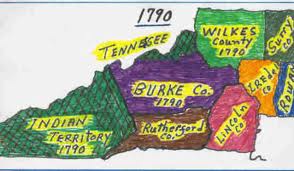
 outh through the Appalachian Valley called the Great Warrior’s Path. Much of the trail followed the river they called the Shenandoah or “Daughter of the Stars”. After the French and Indian War in the 1750s, and as Colonists expanded into new territory to the South from Pennsylvania, they essentially followed the same route, and it became known as the Great Wagon Road. Most of the German and Scotch-Irish settlers pushing out of Pennsylvania to find new lands followed this road southward as they could not easily scale the mountains to the West. It was by far the most heavily traveled route to the Burke frontier in North Carolina.