
 The oldest child of John Depew and his wife Catharine was Isaac Depew, Sr., born in Sept 1758 in New Jersey. When the family moved to a farm near Fincastle in Botetourt County, VA. he moved with them, but at the age of 18 he enlisted in the militia to fight in the Revolutionary War. Per his pension application filed many years after the war, in 1776 and 1777 he served several 3 month tours of duty as a Private fighting the Cherokee Indians. These actions first brought him to be familiar with East TN. In 1780 he again joined the militia to repel the Cherokees, and earned the rank of Captain under Colonel Landon Carter.
In Oct 1780, Captain Isaac Depew was one of the 1040 volunteers from Tennessee called the Overmountain men who played a very significant role in defeating the British in the Battle of Kings Mountain. The men first gathered at Sycamore Shoals near Elizabethton, TN, and then marched 80 miles in 5 days across the mountains to join forces with about 400 North Carolina militia. Together they engaged the enemy led by Colonel Ferguson at Kings Mountain just below the South Carolina border. (Recall from a previous post about our Ayers ancestors in the Rev War, that Elihu and Nathaniel Ayers fought with the NC militia.) The victory at Kings Mountain proved decisive in defeating the British in the South and eventually in gaining American independence. Isaac Depew also stated that he later took part in the Battle of Guilford Courthouse in 1781.
After the war, Isaac returned home to Virginia. However, by 1784 he had relocated to East Tennessee. By occupation he was a wheelright, cabinet maker and a farmer. He also became active politically when in 1799 he was appointed Commissioner of Jonesborough and in 1801 Commissioner of Washington County. He eventually settled at Rock Springs, in Sullivan County. Between 1787 and 1850 he bought and sold land on a regular basis and at one point had accumulated 3000 acres on and near Bays Mountain.
Isaac Depew, Sr. married twice, first to Jane Jones in 1780, and then after she died to Virginia Grimes, a widow in 1804. Altogether, he was the father of seventeen children. According to reports, the Depews were deeply religious people and highly skilled workmen. Isaac Depew had heirs  who were magistrates, physicians, farmers and soldiers. A grandson, The Reverend William P. Depew, to whom he had given substantial land became a preacher in the Methodist Church and was held in very high regard by all who knew him. He gave the land, organized and help build Depew’s Chapel and served as its pastor. Several Depews are buried in the Chapel cemetery including Captain Isaac Depew. The church, located in the shadow of Bays Mountain near Kingsport, TN, is still in use today.
Captain Isaac Depew was one of the most respected men in his county. However, he became the subject of general notoriety when he became opposed in principle to the Congressional Act of 1832 which established pensions for service in the Revolutionary War. His complaint was that it allowed pensions to  persons able to support themselves. He believed the Act was too liberal in its provisions, and those who did not need the aid obtained it too easily. He personally possessed property and good health and the ability to subsist without aid from the government. It is totally unclear then, why Isaac Depew eventually filed his own application in 1852. By that time he was already 94 years old and other volunteers who could have provided testimony of his service had already died before him. So the application was turned down due to lack of sufficient proof, and he died in 1854 without providing any additional information.



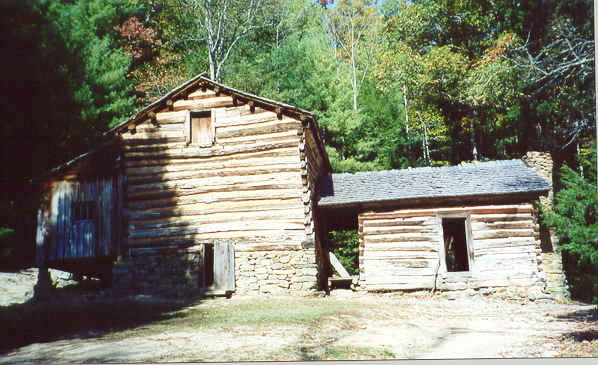




 llette, and she and some other young women like to go watch the men in the CCCs constructing Cove Lake. There she met Vurl who was a bulldozer driver. Rose and Vurl had three children: Jack, Bob, and Carolyn. They moved to Baltimore in the late 1930s where Vurl got a job at the Baltimore Shipyards, and where he continued working during WWII. After the war, he became a partner in a sawmill operation, and later owned a
 successful hardware & lumber store in Glen Burnie, MD. Rose had a sweet and gentle disposition and always wore a smile. She was a homemaker and the family attended the Nazarene Church. In the 1970s, Rose and Vurl moved to Florida, first to Homestead and then to North Ft Myers, where they spent the rest of their years. Vurl died in 1988 at age 71 and Rose died in 2001 at age 85.
 hn worked as a carpenter for many years at the Oak Ridge National Laboratories established during WWII in adjacent Anderson County, TN, as part of the effort to produce materials for a nuclear bomb. Mary was a homemaker and was a very quiet spoken lady with a quick smile. The family attended the Independent Baptist Church in LaFollette. John died in 1992 and Mary died in 2007 at age 88.


 aFollette, TN
 plus 6 months”. He was 5 ft 10 in tall and weighed 140 Lbs. His group was asked to volunteer to go over to the Army Air Forces. Not knowing what the best move would be, Ira decided to wait and see what most of the other soldiers would choose. To his dismay, his name was called first in alphabetical order. Without knowing what the others would do, he decided to step out and volunteer. This single decision may have saved his life as he spent the remainder of the war out of the infantry and mostly out of harms way.-


 The 7th Air Depot Group moved back to England in Lancashire around 29 December 1942. I remember him telling me that he was stationed near Blackpool. A post card he wrote home not long after being assigned there indicated he was in the Repair Squadron. However, he was soon assigned as an orderly in the Officers Dining Hall. The officers really liked him and he remained in this position for the remainder of the war. In the Dining Hall photo, he is standing at the far right side. It was during this period that he was promoted to Corporal.-
 eave in London

 fter return to stateside, Ira was temporarily sent to Fort McPherson, GA where he was separated from the service on 2 December 1945. In addition to his Honorable Discharge Papers, he was given a Certificate of Appreciation from Commanding General Hap Arnold of the Army Air Corps, and a Thank You Letter from President Truman.-